- All products
- Retro Computers
- Apple-1 Replica Boards
- A-ONE
- Spare Parts (IC’s)
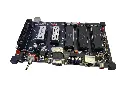
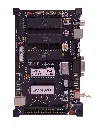
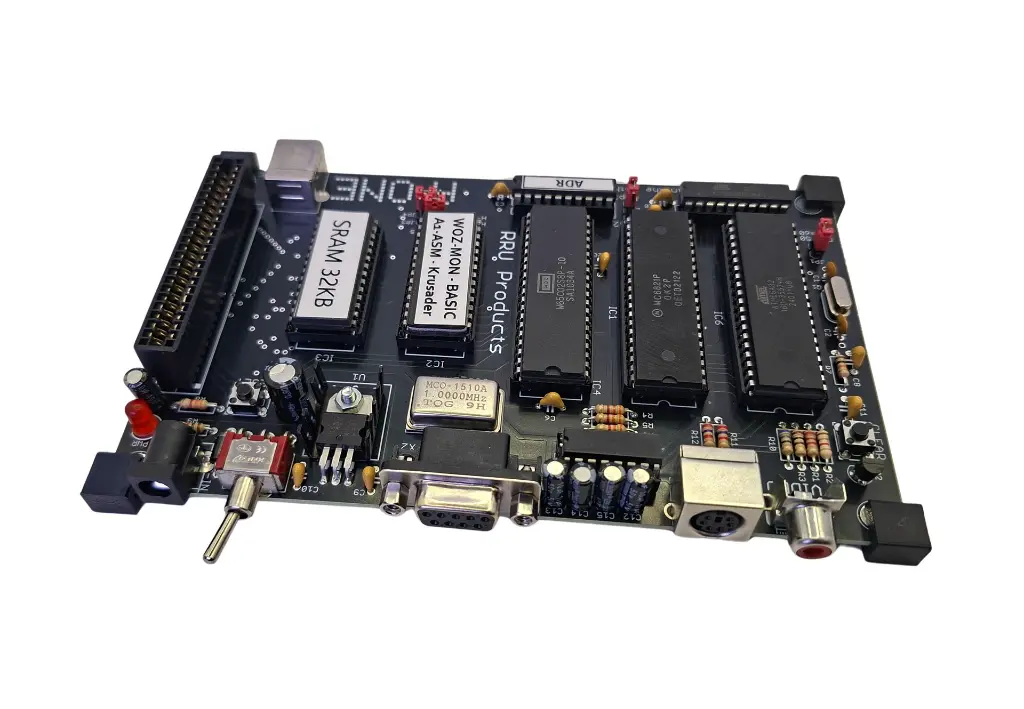
- A-ONE Standard Board – Apple-1 Replica
- Spare Parts (IC’s)
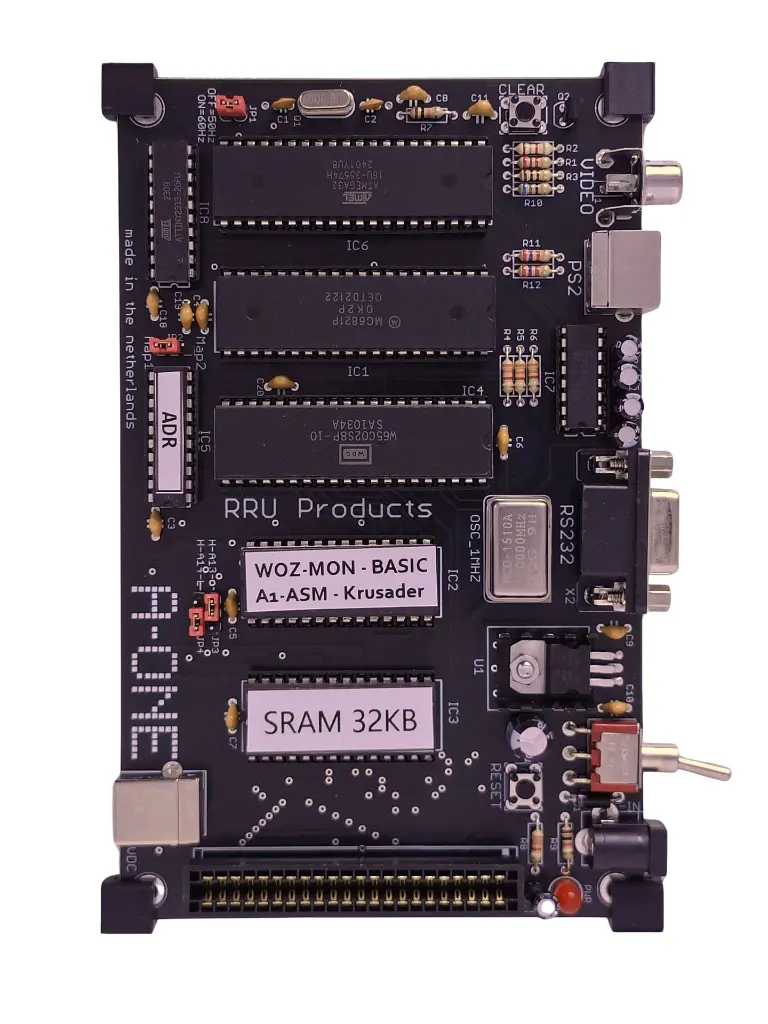
A-ONE Standard Board – Apple-1 Replica
Relive the computer that changed history
In 1976, Steve Wozniak and Steve Jobs released the Apple-1, a simple-looking board that sparked the personal computer revolution. Sold originally for $666.66 with just 4 KB of RAM, it was revolutionary for its time. Today, fewer than 50 originals survive, and auction prices have climbed into the hundreds of thousands of dollars, making them inaccessible to most.
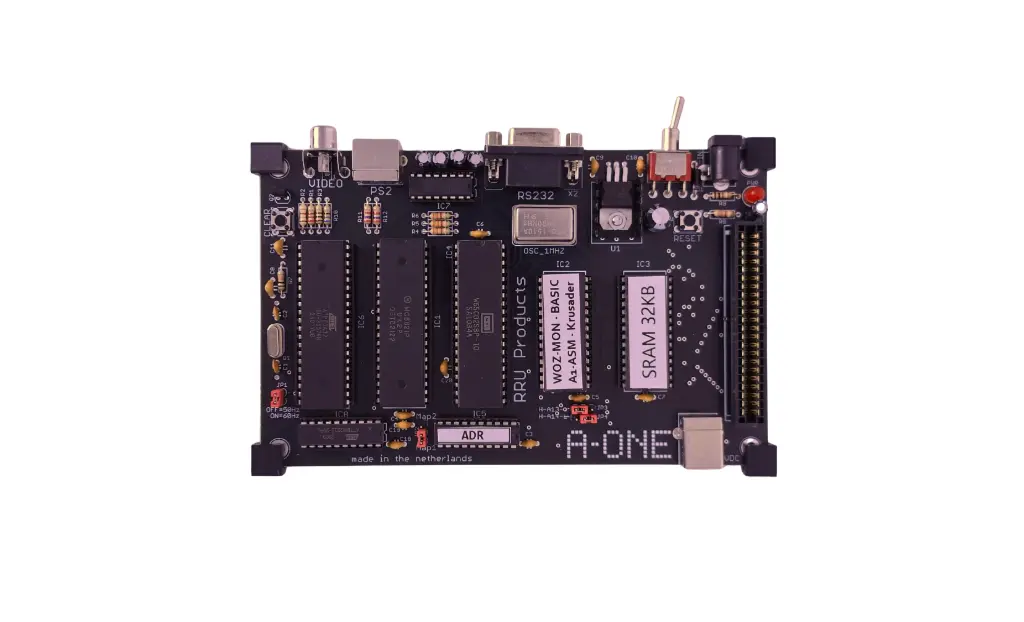
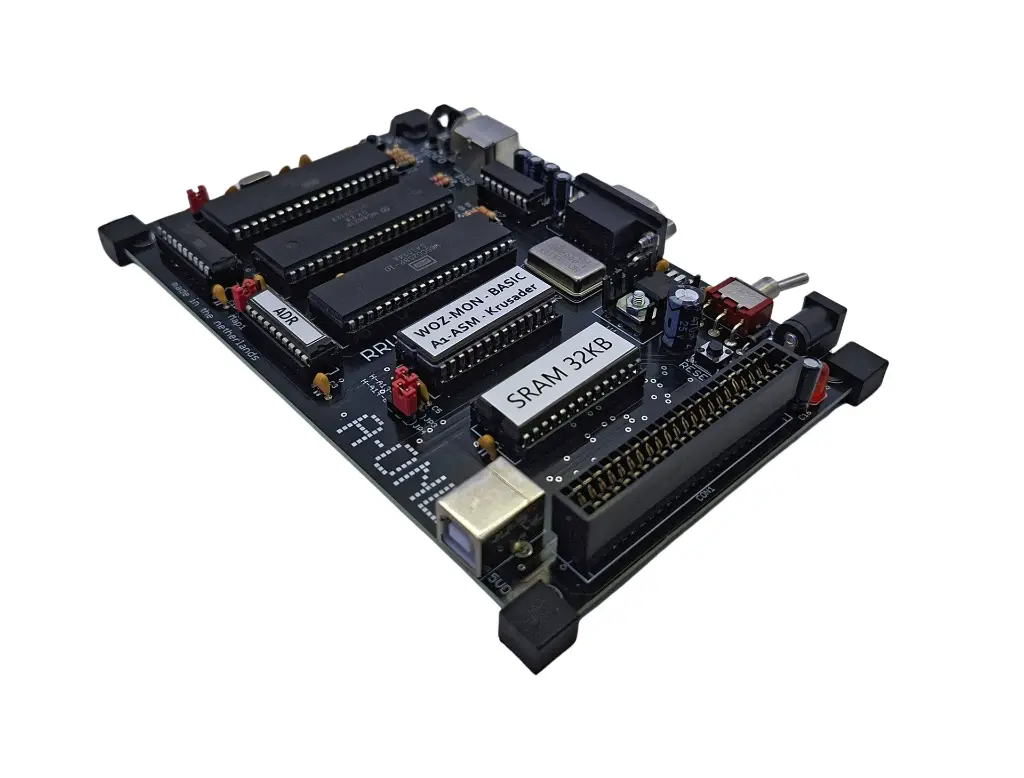
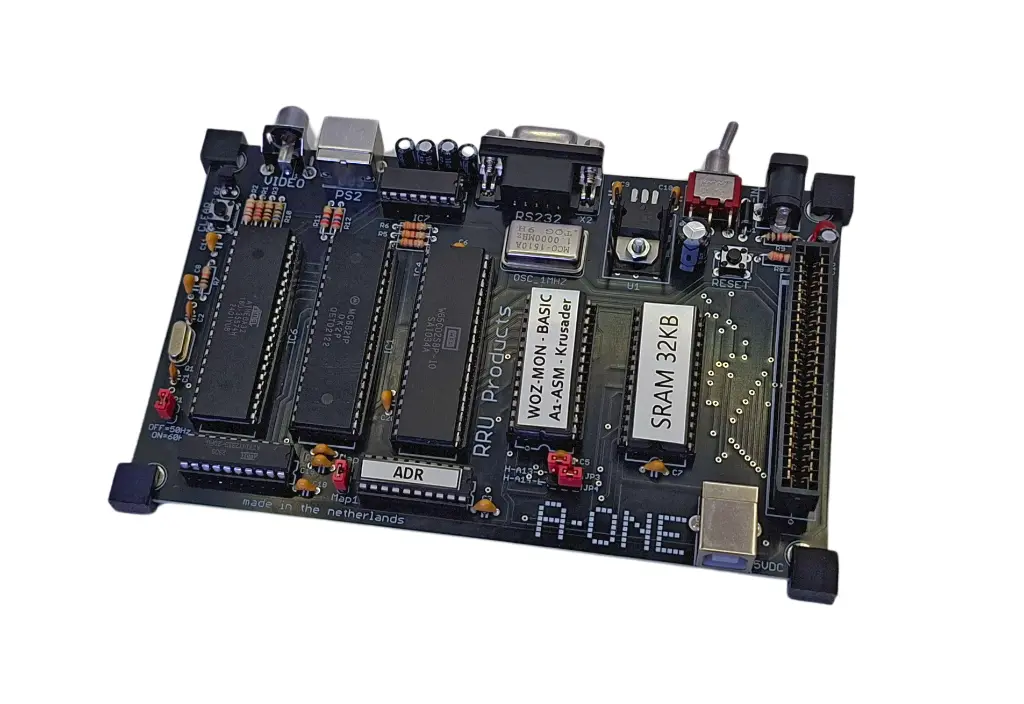
The A-ONE Standard Board brings this history back within reach. Designed in 2006 by Franz Achatz and developed with permission from Steve Wozniak to use the original firmware, the A-ONE is one of the most faithful and respected Apple-1 replicas ever created.
A Replica Born From Passion and Simplicity
Unlike software emulators or FPGA clones, the A-ONE is a real, working computer built around the same architecture as the original Apple-1. At its heart you’ll find the iconic MOS 6502 CPU and the 6821 PIA, just like Wozniak specified in 1976.
Franz’s philosophy was clear: stay authentic, but make the design as minimalistic and elegant as possible. By reducing the chip count and integrating carefully chosen microcontrollers, the A-ONE achieves both historical fidelity and modern practicality.
Modern Enhancements, Faithful Experience
To keep the Apple-1 experience alive but reliable in today’s world, the A-ONE uses two Atmel microcontrollers:
- ATmega32 Video Controller – runs a custom Video Terminal Program that outputs composite video at 40 × 24 characters. Supports both 50 Hz and 60 Hz refresh rates, so it works worldwide. Characters scroll smoothly across the screen, just like in 1976.
- ATtiny2313 Keyboard Controller – translates input from a standard PS/2 keyboard into ASCII for the A-ONE. It also allows serial input at 2400 baud, giving you flexibility for program upload.
Both controllers communicate with the A-ONE over serial, faithfully mimicking the behavior of the original Apple-1 terminal, including character echo and serial mirroring. A small enhancement is included: Ctrl-L clears the screen – a convenience feature not found in the original Apple-1.
This microcontroller approach replaces many discrete chips, keeping the design compact (160 × 100 mm Eurocard format) while remaining true to the Apple-1 spirit.
Hardware Specifications
- CPU: MOS 6502, running at 1 MHz
- I/O: 6821 PIA (Peripheral Interface Adapter)
- Memory: 32 KB SRAM (expansion-friendly, compared to 4 KB in 1976)
- ROM: Includes Woz Monitor, Apple BASIC, A1 Assembler, and Krusader
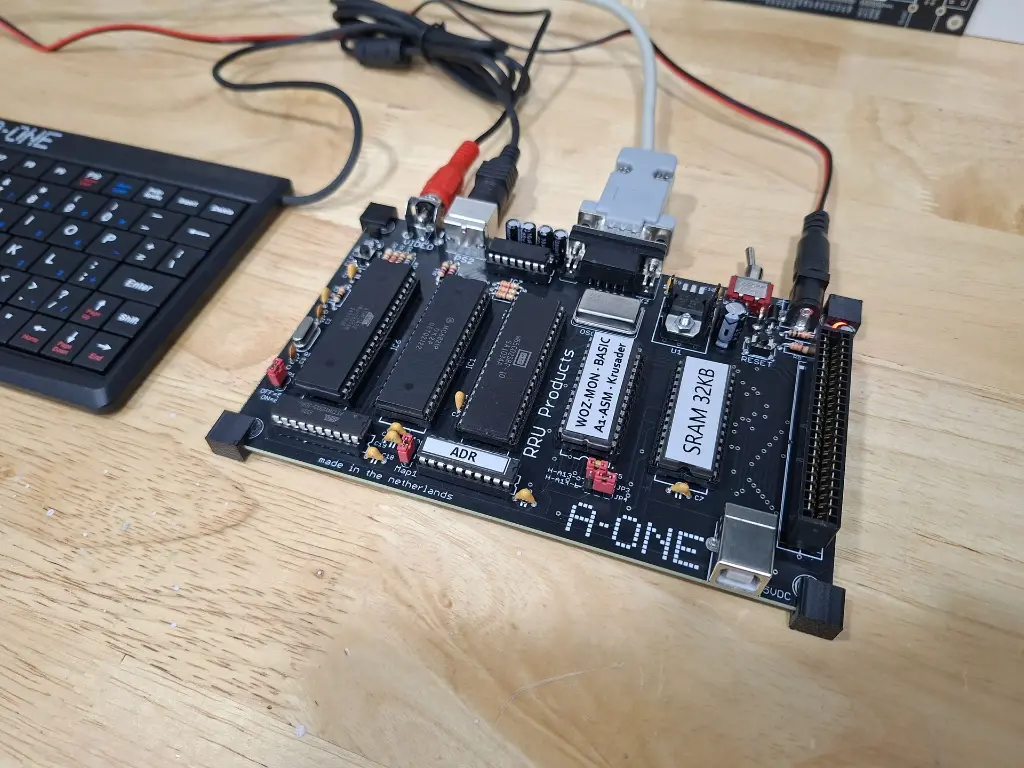
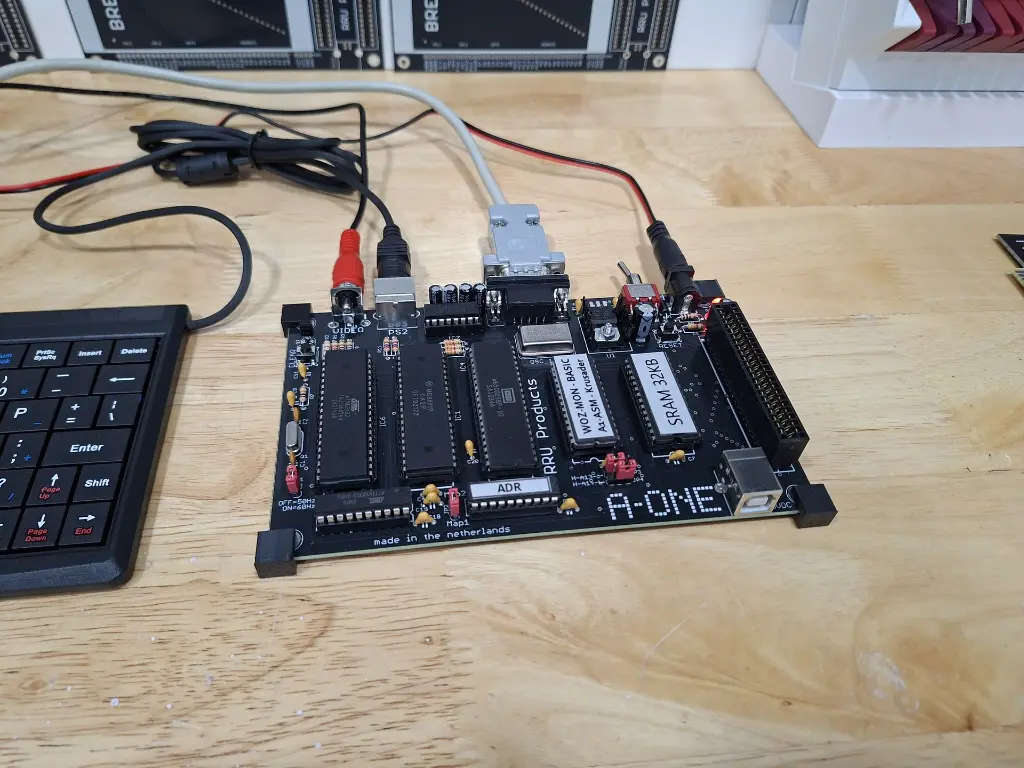
- Video: Composite output, 40 × 24 characters, NTSC/PAL compatible (50/60 Hz)
- Keyboard: Standard PS/2 keyboard (US layout)
- Serial: RS-232, 2400 baud (program upload/download)
- Expansion: 44-pin Apple-1 compatible edge connector
- Board Size: 160 × 100 mm (Euro-format)
- Power: 9–12 V DC, ~250 mA
Software Environment
On startup, the A-ONE offers a familiar Apple-1 environment:
- Woz Monitor – low-level machine language monitor for direct 6502 programming.
- Apple BASIC – the original BASIC interpreter for high-level programming.
- Krusader – a compact assembler that fits neatly in memory, allowing you to write and assemble 6502 code directly on the A-ONE.
- A1-Assembler – an alternative assembler developed by San Bergmans, optimized to fit within just 4 KB of RAM.
With these tools, you can code, test, and run programs just as early Apple enthusiasts did, while enjoying the stability of modern hardware.
Who It’s For
- Retro computing fans – Own and run one of the most authentic Apple-1 replicas.
- Collectors – A historically recognized board, even featured in the All About Apple Museum in Genoa, Italy.
- Students & educators – A hands-on way to learn 6502 assembly, BASIC, and early computer architecture.
- Makers & engineers – Use the expansion connector to prototype hardware, or step up to the A-One Extended Board with breadboard area.
Recognized Worldwide
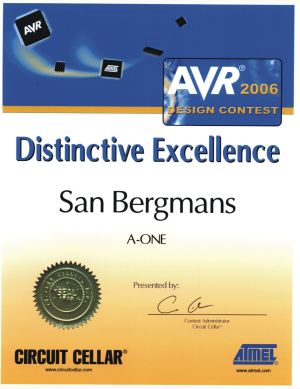
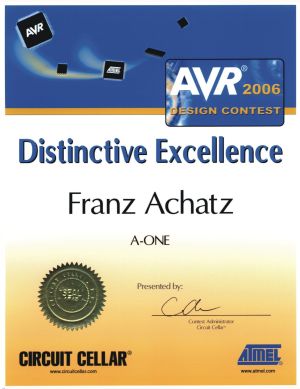
- Distinctive Excellence Award – won at the 2006 Atmel AVR Design Contest, organized by Circuit Cellar magazine.
- Museum Piece – an A-ONE board is permanently on display at the All About Apple Museum in Genoa, Italy, the world’s largest Apple museum.
- Community Approved – praised on platforms like SB Projects and Applefritter for its minimalistic, faithful design.
The A-ONE Standard Board is not just a replica – it is a working piece of computing history.
Bring the revolution of 1976 to your desk, and experience the roots of modern computing for yourself.
The Story of the A-ONE
Bringing the legendary Apple-1 back to life for enthusiasts worldwide
In 1976, Steve Wozniak and Steve Jobs introduced the world to the Apple-1, a computer that would change history. Only about 200 units were ever built, and fewer than 50 still exist today. With auction prices reaching hundreds of thousands of dollars, the Apple-1 has become an untouchable collector’s item.
For many enthusiasts, that meant they could only dream of owning or working with one. But in 2006, Franz Achatz, an electronics engineer based in the Netherlands, decided to change that.
Inspiration and Beginnings
Franz’s first encounter with Apple was in 1982, when he bought an Apple II – one of the most advanced home computers of its time. Later, he upgraded to an Apple IIc, but the fascination with Apple’s very first machine never left him. When Apple celebrated its 30th anniversary in 2006, Franz saw the perfect opportunity: build a faithful replica of the Apple-1.
“I knew from the start that the CPU had to be the original MOS 6502, paired with the 6821 PIA for I/O. I didn’t want to emulate it with modern chips – I wanted the A-ONE to be as authentic as possible.” – Franz Achatz
The first widely available Apple-1 reproduction was the Replica 1, created by Vince Briel in 2003. His pioneering work proved that there was strong interest in revisiting Wozniak’s legendary design.
Franz respected Briel’s achievement, but set out with a different goal: to design a replica that was not only faithful to the Apple-1 but also minimalistic, using the fewest parts possible while retaining full functionality. This philosophy became the cornerstone of the A-ONE project.
From Schematics to Prototype
Franz began in June 2006 by studying the original Apple-1 schematics shared by Steve Wozniak with the Homebrew Computer Club. The biggest challenge was to keep the design simple, true to the spirit of the Apple-1, but still practical for modern use.
Instead of dozens of small RAM chips, Franz used a single larger SRAM module. For address decoding, he introduced a GAL chip, which replaced several individual logic chips while retaining the same functionality.
The keyboard controller was based on an ATtiny2313, making it possible to connect a modern PS/2 keyboard, while still keeping the feel of a 1970s homebrew computer.
After several intense weeks of soldering and programming, the first prototype was complete.
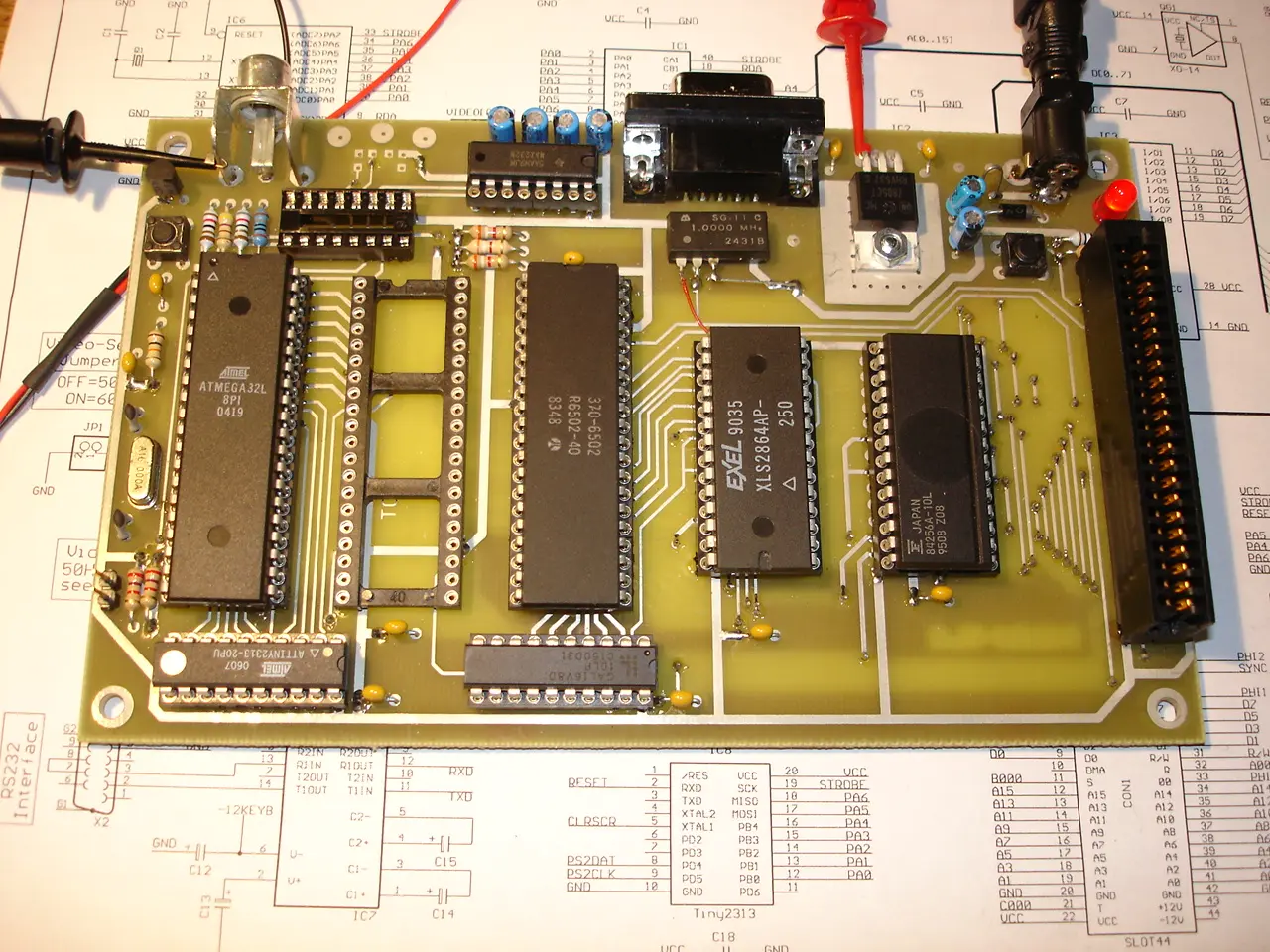
First PCB
Collaboration and Innovation
During this period, Franz collaborated with San Bergmans, well known for his SB Assembler. San created a special version of his assembler that fit into just 4 KB of RAM – leaving only 2 bytes unused! He also contributed ideas for different memory maps, making the design more flexible and closer to the original.
Later, San rewrote the video firmware to improve compatibility across televisions, ensuring the A-ONE would work anywhere. For video, he created a Video Terminal Program to run on an ATmega32 microcontroller, ensuring compatibility with both 50 Hz and 60 Hz displays.
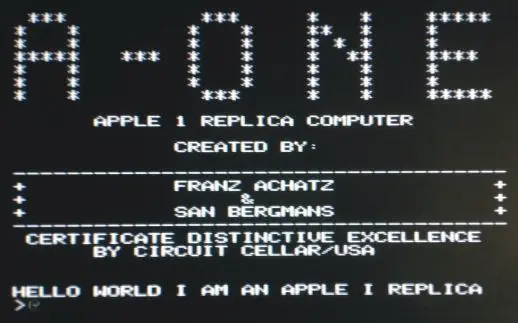
Start Screen A-ONE
Support from Steve Wozniak
One of the most remarkable aspects of the A-ONE story is that Franz received written permission from Steve Wozniak himself to use the original Apple-1 ROM code – including the famous Woz Monitor and Apple BASIC. This made the A-ONE not only a hardware replica but also a true functional descendant of the Apple-1.
Recognition and Awards
In 2006, the A-ONE entered the Atmel AVR Design Contest, organized by Circuit Cellar magazine in the USA. Competing against projects from all over the world, the A-ONE won the “Distinctive Excellence” Award, gaining international recognition.
More Than a Replica
With 32 KB of RAM, composite video output, PS/2 keyboard support, and RS232 connectivity, the A-ONE stayed true to the Apple-1 spirit while offering modern reliability. Later, the A-ONE Extended Board was introduced, featuring an integrated breadboard area for building custom circuits and expanding the Apple-1 experience beyond software.
The A-ONE became not just a replica, but a living tribute to the dawn of personal computing – bridging 1976 with today.
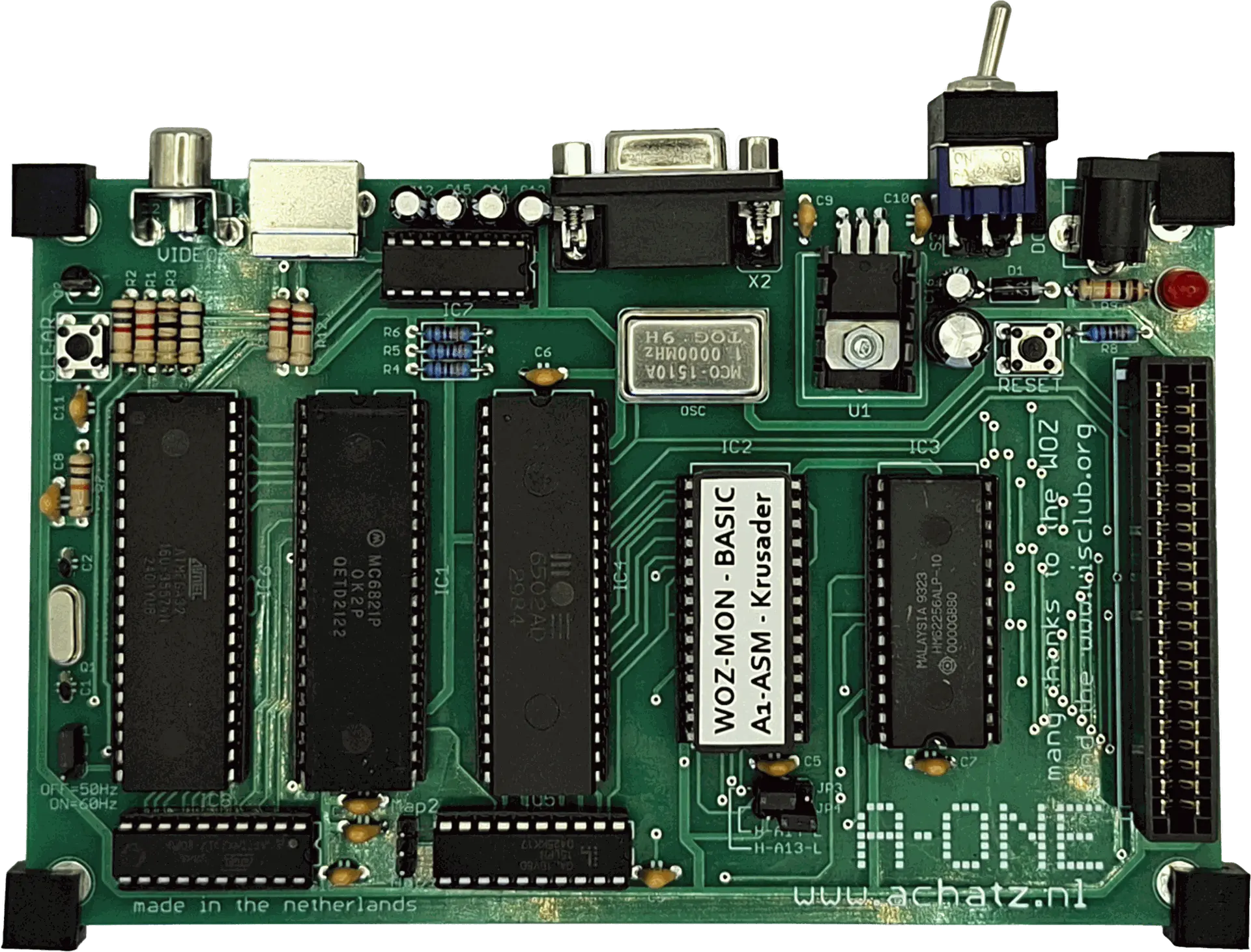
A-ONE Standard Board
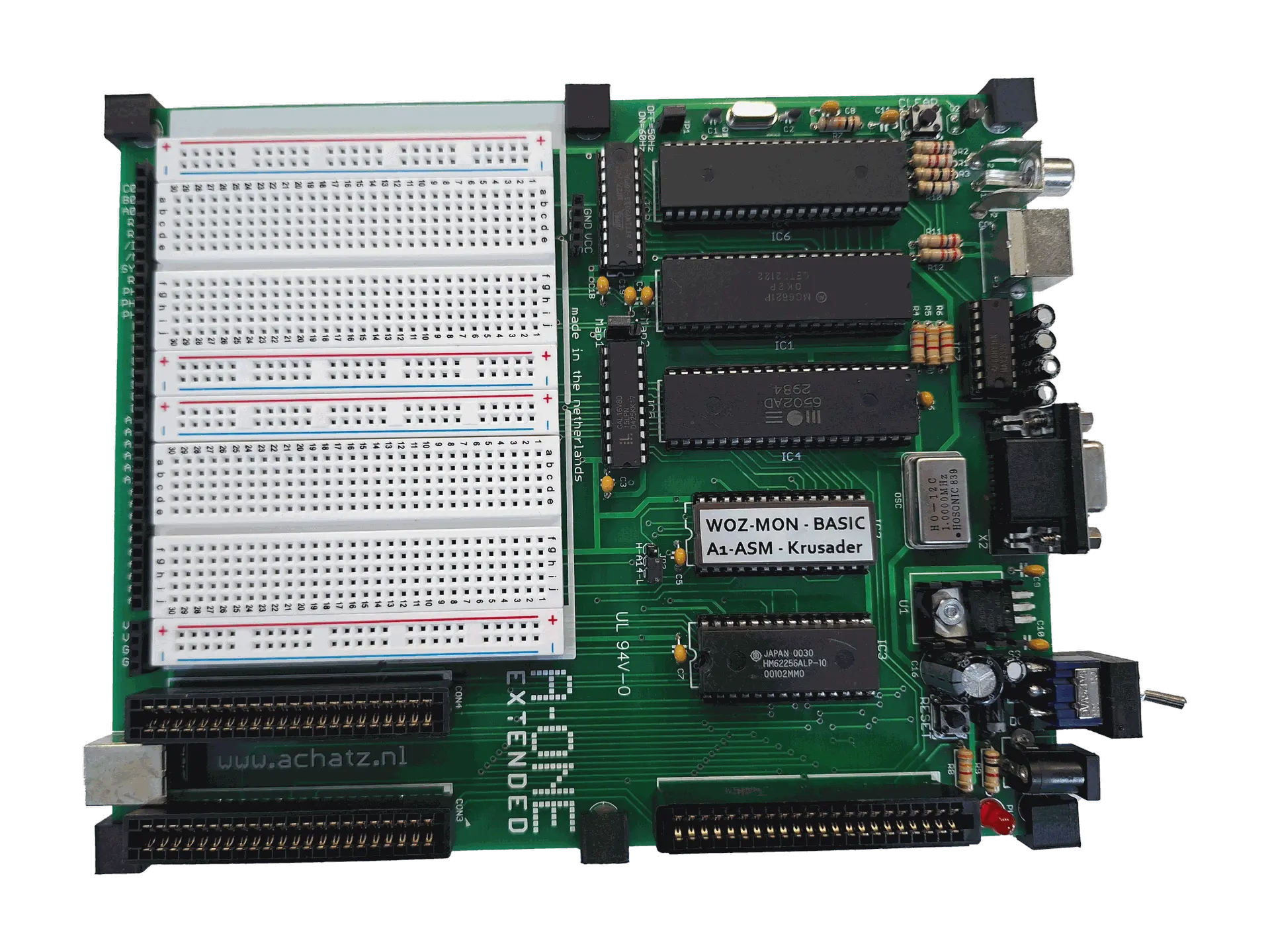
A-ONE Extended Board
About Franz Achatz

Today, Franz Achatz (born in 1961 in Bavaria, Germany) continues his work with RRU, where the A-ONE legacy is kept alive and expanded for a new generation of makers, students, and retro-computing enthusiasts.
Fun fact
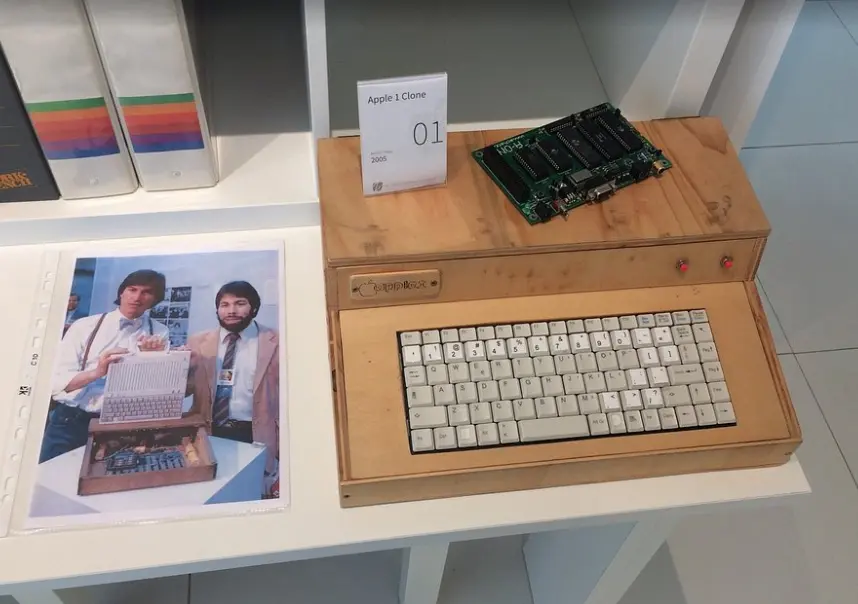
An A-ONE board is on permanent display at the All About Apple Museum in Genoa, Italy – the world’s largest Apple museum. Learn more about the museum here.
| Article number | RRU-A-ONE-0001 |
GTIN / EAN Code | 8721325228079
|
Brand | RRU Products |